Taurine Deficiency in Dogs: The Heart Risk Hiding in Your Dog's Bowl
Your dog's heart beats roughly 100,000 times a day. Every single contraction depends on a tiny amino acid most dog owners have never heard of: taurine.
Taurine doesn't build muscle. It doesn't show up on the guaranteed analysis panel of your dog's food. It's not something the body stores in large quantities. But without enough of it, the heart muscle weakens, the chambers stretch, and eventually the whole system fails. The condition is called dilated cardiomyopathy — DCM — and it's been killing dogs in breeds that shouldn't get it.
In July 2018, the FDA dropped a bombshell. They announced an investigation into a surge of DCM cases in dogs eating certain grain-free diets. Not just genetically predisposed breeds. Golden Retrievers, sure — they have a known taurine issue. But also Shih Tzus. Mixed breeds. Dogs with no family history of heart disease. The common thread wasn't genetics. It was diet.
The investigation is still open. The exact mechanism is still debated. But the FDA's own data points to diets heavy in peas, lentils, chickpeas, and potatoes — and one of the leading hypotheses points straight at taurine deficiency. Your dog might be running low on the one amino acid their heart can't live without, and the food you're feeding might be the reason.
Let's talk about what taurine actually does, what the FDA found, why beef heart is the richest natural source on the planet, and how to get it into your dog before there's a problem.
What Is Taurine and Why Does Your Dog Need It?
Taurine is a sulfur-containing amino acid critical to cardiac function, vision, bile acid production, and immune regulation. Unlike cats, dogs can synthesize taurine from dietary precursors — methionine and cysteine — but that synthesis can fail when diets are low in animal protein or high in compounds that interfere with taurine metabolism.
In the heart, taurine regulates calcium handling within cardiac muscle cells. When calcium signaling becomes disordered, the heart can't contract and relax efficiently. Over months and years, this manifests as a thinning, weakening heart muscle — dilated cardiomyopathy. The chambers enlarge. The walls stretch. The pump fails.
Research published in the Journal of Animal Science found that pea-based diets altered plasma amino acid profiles and reduced whole blood taurine concentrations in dogs. A separate study in Frontiers in Veterinary Science documented improvements in cardiac function when dogs were switched from grain-free, legume-heavy diets to traditional or fresh food diets.
Taurine is also concentrated in the retina, where it protects photoreceptors from oxidative damage. It conjugates with bile acids, enabling fat digestion. It acts as an antioxidant in white blood cells during immune responses. It's not optional. It's essential. And the modern canine diet is not always delivering it.
What Did the FDA Investigation Actually Find?
The FDA's investigation into dilated cardiomyopathy identified over 500 reported cases by 2019, with more than 90% of affected dogs eating grain-free diets. Peas, lentils, chickpeas, and potatoes were the most common ingredients in those diets. The FDA has not established causation, but the correlation is strong enough that veterinary cardiologists have issued public warnings.
The FDA's publicly released data named 16 brands most frequently associated with DCM reports. Acana and Taste of the Wild topped the list, followed by Zignature, 4Health, Earthborn Holistic, Blue Buffalo, and Fromm.
| Brand | Number of DCM Reports to FDA |
|---|---|
| Acana | 67 |
| Taste of the Wild | 64 |
| Zignature | 53 |
| 4Health | 32 |
| Earthborn Holistic | 32 |
| Blue Buffalo | 31 |
| Fromm | 24 |
Let's be clear about what this data does and doesn't mean. These are voluntary reports, not confirmed cases. Bigger brands generate more reports by virtue of market share. The FDA has not issued a recall or definitively declared any specific diet dangerous. The investigation remains open.
But the clustering is hard to ignore. Small, boutique brands that built their entire identity around grain-free, pulse-legume-heavy formulas dominate the list. These were the darlings of the premium pet food revolution. The brands that promised ancestral nutrition. The brands that charged premium prices. And their names show up repeatedly in a federal investigation into canine heart disease. That's not a roast. That's just what the data says.
We covered the full investigation, the leading theories, and the cautious approach in our pea protein and DCM post.
Why Would These Diets Cause Taurine Deficiency?
The exact mechanism remains unproven, but leading hypotheses include: insufficient taurine precursors in legume-heavy diets, reduced taurine bioavailability due to anti-nutritional factors in peas and lentils, and amino acid imbalances that impair taurine synthesis. Some affected dogs have low blood taurine. Others have normal taurine but still develop DCM, suggesting multiple mechanisms may be involved.
Dogs synthesize taurine from methionine and cysteine — amino acids found almost exclusively in animal tissue. Plant proteins are low in these precursors. When a dog's diet shifts from animal protein to pea protein, the raw materials for taurine synthesis may simply not be there in sufficient quantity.
Additionally, legumes contain compounds that may interfere with taurine absorption or increase its excretion. The research is still evolving. What's clear is that something about these diets is disrupting cardiac function in a subset of dogs, and taurine status is one of the most measurable and modifiable factors in that equation.
Which Organ Meat Is Highest in Taurine?
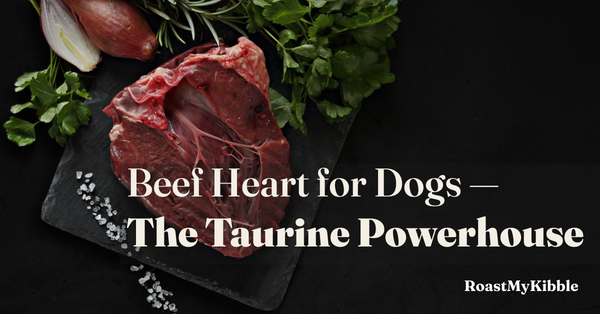
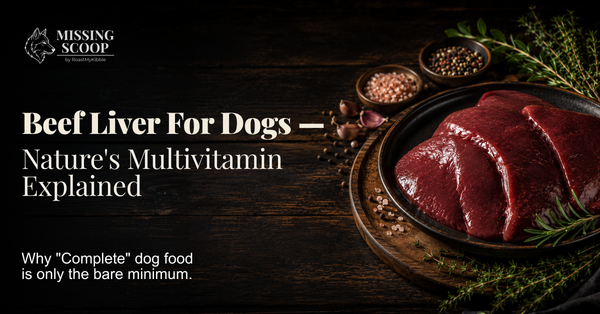
Beef heart is the richest natural dietary source of taurine available to dog owners. A 100-gram serving of raw beef heart contains approximately 65 mg of taurine — significantly more than any muscle meat. Beef liver contains approximately 19 mg, and beef kidney approximately 18 mg per 100 grams.
| Organ Meat | Taurine (per 100g, raw) | Also Rich In |
|---|---|---|
| Beef Heart | ~65 mg | CoQ10, iron, zinc, B12 |
| Beef Liver | ~19 mg | Vitamin A, B12, copper, iron |
| Beef Kidney | ~18 mg | Selenium, B vitamins |
| Chicken Breast (comparison) | ~3 mg | — |
The numbers are not subtle. Beef heart contains over 20 times the taurine of chicken breast. If taurine status is a concern — and for dogs on legume-heavy diets, it should be — heart is the answer.
But here's the practical catch: taurine is water-soluble and heat-sensitive. Cooking beef heart in water leaches taurine into the cooking liquid and thermally degrades what remains. Losses of 50–70% are commonly cited in food science literature. Raw heart preserves everything. Freeze-dried heart preserves everything — the low-temperature process removes water without damaging heat-sensitive amino acids. Cooked heart is better than no heart. But if taurine is the goal, cooking works against it.
We covered the full nutritional comparison in our freeze-dried vs. raw vs. cooked guide and the complete cardiac benefits in the beef heart deep dive.
Which Dogs Are Most at Risk?
Large and giant breeds, senior dogs, dogs on grain-free or legume-heavy diets, and breeds with known genetic predispositions — Golden Retrievers, Dobermans, Boxers, Cocker Spaniels — have the strongest case for taurine monitoring and dietary support.
But the uncomfortable truth is that any dog eating a commercial diet light on animal protein and heavy on plant fillers may be running suboptimal taurine levels. The deficiency develops silently. There are no obvious early symptoms. By the time a dog shows exercise intolerance, coughing, or labored breathing, the heart is already structurally compromised.
Prevention is the play. Taurine-rich food is the prevention.
Frequently Asked Questions About Taurine and DCM
Q: Should I stop feeding grain-free food?
Not necessarily. The concern is specific to diets where peas, lentils, chickpeas, or potatoes dominate the first five ingredients. If your dog's grain-free food is meat-heavy and legume-light, the risk is lower. Run the ingredient panel through our 5-Second Dog Food Label Lie Detector and see what's actually in there.
Q: Can I just add a taurine supplement?
Synthetic taurine supplements exist and are sometimes prescribed for diagnosed deficiency. But whole-food sources — specifically beef heart — provide taurine alongside CoQ10, B vitamins, and bioavailable minerals that work synergistically. Whole food beats a pill.
Q: How much beef heart should I feed?
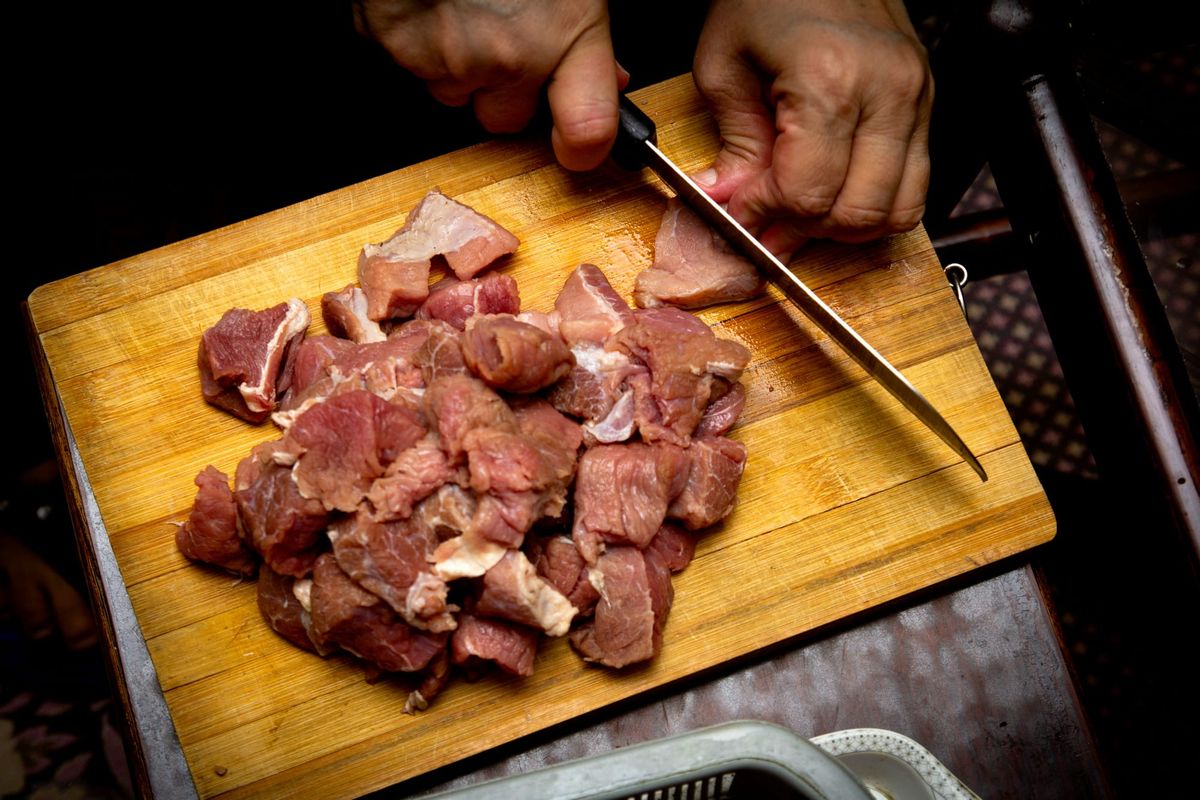
Heart is nutritionally dense. For a 50-pound dog, start with 0.5–1 ounce per day as a supplement to their regular diet. Follow the feeding guidelines in the beef heart deep dive for detailed amounts by weight.
Q: Can taurine deficiency be reversed?
In many reported cases, yes. Dogs switched from legume-heavy diets to traditional or fresh food diets, with taurine support, have shown improvement in cardiac function — sometimes dramatically. The Frontiers in Veterinary Science study documented this reversibility, which is one of the strongest pieces of evidence linking diet to the disease.
What to Do This Week
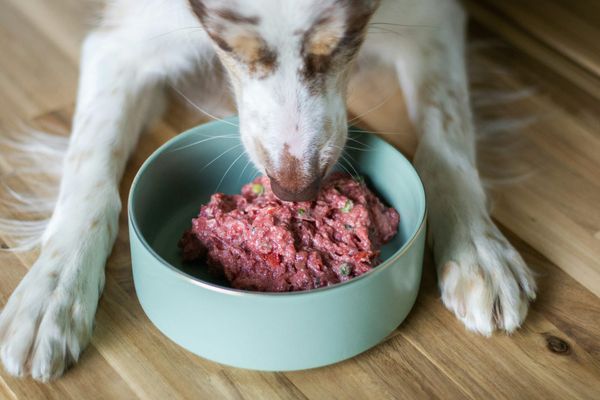
Flip over your dog's food bag. If peas, lentils, chickpeas, or potatoes appear in the first five ingredients, take taurine seriously. Add beef heart to the bowl — raw or freeze-dried, never overcooked. Watch your dog's energy. Listen to their breathing at rest. The heart you protect today is the one sleeping at your feet tonight.
And if sourcing and prepping raw heart sounds like more than you want to take on, Missing Scoop includes grass-fed beef heart in every scoop — freeze-dried, taurine intact, ready in five seconds.
Is your dog eating a grain-free diet? What's in the first five ingredients? Drop them in the comments. Let's see how many bowls are running low on taurine.