Beef Liver for Dogs: Nature's Multivitamin (And Why a Scoop Beats a Pill)
If you only add one organ to your dog's bowl for the rest of their life, make it liver.
Not heart—though heart is spectacular for taurine, and we'll get to that. Not kidney—though kidney brings selenium and B vitamins you don't want to miss. Liver. Start with liver. Because liver is the single most nutrient-dense food you can feed a dog, period. It's not close. It's not a matter of opinion. The nutritional data is embarrassing for every other ingredient in the bowl.
The dog food industry knows this. It's why they've spent decades trying to replicate liver with synthetic vitamin premixes sprayed onto brown pellets. It's why prescription diets for anemia, skin conditions, and immune dysfunction are basically liver nutrition delivered through a chemistry set. It's why the phrase "nature's multivitamin" appears in every honest discussion of canine nutrition.
And yet most dogs eat almost none of it.
Muscle meat, grains, potatoes, peas—these dominate commercial and homemade diets. Liver, the one ingredient that could close almost every micronutrient gap in a single scoop, is missing. This is your guide to bringing it back.
What Nutrients Are in Beef Liver?
Beef liver is the most nutrient-dense organ meat available. A 100-gram serving (about 3.5 ounces) delivers massive amounts of vitamin A, B12, iron, copper, folate, and riboflavin—micronutrients that are almost entirely absent from muscle meat.
Let's put the numbers side by side again, because they never stop being shocking:
| Nutrient | Beef Liver (100g) | Chicken Breast (100g) | Liver's Advantage |
|---|---|---|---|
| Vitamin A | ~17,000 IU | ~30 IU | 566x more |
| Vitamin B12 | 59 mcg | 0.3 mcg | 196x more |
| Copper | 9.8 mg | 0.04 mg | 245x more |
| Folate | 290 mcg | 4 mcg | 72x more |
| Iron | 4.9 mg | 0.7 mg | 7x more |
| Riboflavin (B2) | 2.8 mg | 0.1 mg | 28x more |
These numbers come from standard USDA food composition data. They're not debatable. Beef liver doesn't just edge out muscle meat—it annihilates it. Across every micronutrient that matters for immune function, energy metabolism, red blood cell production, and skin health, liver is playing a different game entirely.
And here's what makes this particularly damning for the kibble industry: those synthetic vitamin sprays they apply after extrusion? They're trying to replicate what liver does naturally. Vitamin A palmitate. Cyanocobalamin (synthetic B12). Ferrous sulfate (iron). These are the lab-made versions of what liver provides in whole-food form. The industry strips real nutrition out through high-heat processing, then sprays on chemical replacements. Liver skips the entire charade and delivers the real thing.
We've documented this pattern before—powdered cellulose as sawdust filler, brewer's rice as beer waste. Liver is the opposite. It's what the fillers are filling space instead of.
What Does Vitamin A in Liver Actually Do for Dogs?
Vitamin A supports vision, immune function, skin health, and cellular growth. The form found in liver—preformed retinol—is highly bioavailable and does not require conversion like the beta-carotene in plants. Dogs absorb and use liver-derived vitamin A efficiently.
Vitamin A is not one thing. It's a family of compounds, and the form matters enormously.
Plants contain carotenoids (like beta-carotene from carrots and sweet potatoes), which must be converted to retinol in the body. Dogs are inefficient at this conversion—far less efficient than humans. Feeding your dog carrots for vitamin A is like giving them a locked safe without the combination. The nutrients are in there somewhere, but good luck accessing them.
Liver contains preformed vitamin A—retinol, ready to use, no conversion required. This is the form dogs evolved to consume. When a wolf rips into a prey animal's liver, they're getting a direct hit of bioavailable retinol that immediately supports:
- Vision: Retinol is a component of rhodopsin, the light-sensitive protein in the retina. Deficiency causes night blindness and eventually complete retinal degeneration.
- Immune function: Vitamin A regulates T-cell production and maintains mucosal barriers—the first line of defense against pathogens entering through the gut, lungs, and nasal passages.
- Skin and coat: Retinol controls keratin production. Deficiency shows up as dry, flaky skin, a brittle coat, and chronic dermatitis that no amount of fish oil will fix.
- Cellular growth: Vitamin A is essential for cell differentiation. Puppies need it for proper bone growth and organ development. Adults need it for tissue repair.
No synthetic vitamin A spray on kibble can match the absorption efficiency of liver-derived retinol, because liver delivers it alongside the fats and cofactors that facilitate uptake. Whole food wins again.
Is It Possible to Feed Too Much Liver?
Yes. Vitamin A toxicity (hypervitaminosis A) is a real risk if liver is fed in excessive quantities over extended periods. The risk is dose-dependent and cumulative. Feeding liver within the recommended 5-10% of total diet is safe. Overfeeding can cause joint stiffness, bone spurs, and in extreme cases, liver damage.
This is the question that scares people away from liver, and it's worth taking seriously. Vitamin A is fat-soluble, meaning excess is stored in the body rather than excreted. You can overdo it.
The established toxic threshold for dogs is approximately 2,500-5,000 IU of vitamin A per pound of body weight per day, consumed over weeks to months. Let's do the math for a 50-pound dog:
- Toxic threshold: ~125,000-250,000 IU per day (chronic)
- 1 ounce of beef liver: ~4,800 IU
- 5% liver in the diet (standard recommendation): ~0.8 ounces per day for a 50-lb dog
- That's roughly 3,840 IU—nowhere near the toxic threshold
At recommended feeding levels, liver is safe. The problems begin when owners treat liver as a main course instead of a supplement. If you're feeding your 50-pound dog a half-pound of liver every day for months, yes, you're courting toxicity. If you're feeding an ounce or two a few times a week, you're providing essential nutrition with a wide safety margin.
The practical rule: liver should be about 5% of the total diet by weight. For a homemade batch, that's roughly 2-3 ounces of liver per pound of total food. If you're using a freeze-dried organ topper, follow the manufacturer's guidelines—they've done the math for you.
Concerned about vitamin A? Don't overfeed liver. It's that simple. The benefits at appropriate doses dramatically outweigh the risks. The risk is not "liver is dangerous." The risk is "don't feed your dog a liver-only diet." Which you weren't going to do anyway.
Does the Liver Store Toxins? (Busting the Filter Myth)
No. This is the single most persistent myth about liver, and it's biologically incorrect. The liver's job is to neutralize toxins and excrete them—not store them. What the liver stores is nutrients. The fear that liver is a "toxic sponge" has no basis in mammalian physiology.
Let's kill this one forever.
The liver is a metabolic processing center. It receives blood from the digestive tract, filters out harmful compounds, metabolizes them into less harmful forms, and routes them to the kidneys or bile for excretion. It does not hold onto them. A liver that stored every toxin it encountered would be the first organ to fail in any toxic exposure—which is the opposite of how biology works.
What the liver does store: glycogen (energy), iron, copper, and fat-soluble vitamins (A, D, E, K). These are nutrients, not toxins. The liver is a nutrient vault, not a poison cabinet.
Does sourcing matter? Absolutely. A healthy, grass-fed cow produces a liver with a superior nutrient profile compared to a feedlot-finished cow raised on grain, antibiotics, and growth hormones. But even conventionally raised beef liver is not a repository of stored toxins. The metabolic pathway doesn't work that way.
If you're still worried, the solution isn't avoiding liver. It's sourcing liver from grass-fed, pasture-raised animals whose diets didn't include the pesticides, herbicides, and pharmaceutical residues present in conventional feedlot operations. Quality sourcing eliminates what little concern exists.
How Should You Feed Liver to Your Dog?
Liver can be fed raw, cooked, or freeze-dried. Raw preserves all nutrients but presents practical challenges. Cooking reduces some heat-sensitive vitamins but still provides significant nutrition. Freeze-dried liver delivers raw-level nutrition with zero prep, no mess, and years of shelf stability.
Your options, ranked:
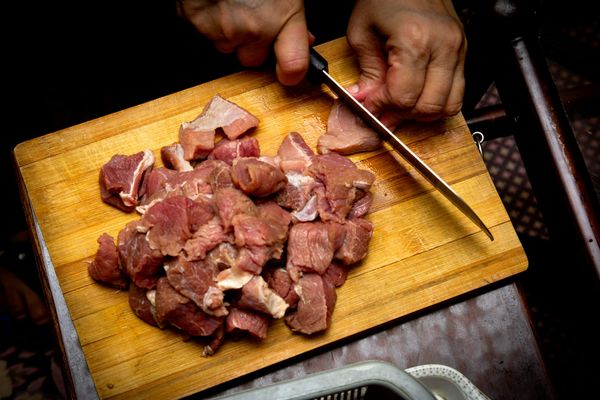
1. Raw Liver
Pros: Complete nutrition. Every enzyme, every vitamin, every amino acid intact. The gold standard for nutrient preservation.
Cons: Sourcing is inconsistent. Storage requires freezer space and planning. Prep is messy, smelly, and unpopular with cohabitants. Some dogs reject the texture. Overfeeding risk is real because raw liver is dense and easy to over-portion.
Best for: Dedicated raw feeders who batch-prep, have reliable sourcing, and don't mind the mess.
2. Cooked Liver
Pros: More palatable for picky dogs. Easier to handle and portion. Still delivers meaningful amounts of vitamin A, iron, copper, and most minerals.
Cons: Heat degrades B vitamins (especially folate and B12) and destroys natural enzymes. Taurine content is reduced, though liver is not a primary taurine source anyway. Nutrient losses of 30-50% for certain vitamins.
Best for: Home cookers who want to incorporate liver into batch-cooked meals and are okay with some nutrient loss in exchange for convenience.
3. Freeze-Dried Liver
Pros: Raw nutrition preserved—no heat, no nutrient loss. Shelf-stable for years. No sourcing, no prep, no smell, no mess. Precisely portioned. Dogs that reject raw liver almost universally accept freeze-dried. Can be fed as treats, crumbled on food, or reconstituted with water.
Cons: Cost per ounce is higher than raw. (Though when you factor in sourcing time, gas, spoilage, and the liver you bought but didn't use, the gap narrows.)
Best for: Anyone who wants the nutritional benefits of raw liver without the sourcing, storage, prep, and sensory nightmare.
We covered the full comparison in our guide to freeze-dried vs. raw vs. cooked organs. The short version: raw is nutritionally perfect, freeze-dried is nutritionally equivalent, and cooked is nutritionally diminished but still valuable.
Frequently Asked Questions About Beef Liver for Dogs
Q: Can I feed chicken liver instead of beef liver?
Absolutely. Chicken liver is milder in flavor, easier to find in grocery stores, and cheaper. It's slightly less nutrient-dense than beef liver but still dramatically more nutritious than any muscle meat. Rotate between beef and chicken liver for variety.
Q: How much liver should I feed my dog per day?
Liver should make up roughly 5% of the total diet by weight. For a 50-pound dog eating about 1 pound of food daily, that's roughly 0.8 ounces (about 22 grams) of liver per day. If using a freeze-dried powder, follow the manufacturer's guidelines—they account for the water weight removed during processing.
Q: Can liver cause diarrhea in dogs?
Yes, if introduced too quickly or fed in excessive amounts. Liver is rich and nutrient-dense. Start with a small amount—half the recommended serving—for the first week, then gradually increase. If loose stools persist, reduce the portion.
Q: Is beef liver good for dogs with anemia?
Yes. Liver is rich in heme iron (the most bioavailable form), B12, and copper—all essential for red blood cell production. It's one of the best dietary supports for anemic dogs, though anemia should always be diagnosed and monitored by a veterinarian.
Q: Can I feed liver to a dog with kidney disease?
Consult your veterinarian. Liver is high in phosphorus, and dogs with advanced kidney disease often require phosphorus restriction. The protein quality is excellent, but the phosphorus load may be contraindicated depending on disease stage.
The Bottom Line
Beef liver is not a supplement. It's not a treat. It's the most nutrient-dense food you can put in your dog's bowl, and its absence from most commercial and homemade diets is the single biggest nutritional gap most dogs face.
Kibble companies spend millions convincing you that a synthetic vitamin spray can replace what liver provides naturally. It can't. Home cookers accidentally starve their dogs of micronutrients because they fill the pot with muscle meat and forget the organs. Both mistakes have the same solution: liver.
Add it raw if you're committed. Cook it into your batch if that's your routine. Scoop it freeze-dried if you want all the nutrition with none of the friction. However you get it in there, get it in there. Your dog's coat, energy, immune system, and cellular health depend on it.
Do you feed your dog liver? Raw, cooked, or freeze-dried? Drop your method in the comments—and if you've noticed any changes in your dog's coat or energy since adding it, I want to hear about it.