Organ Meat for Dogs: Why Your Homemade Food Is Failing Without It
The "Muscle Meat Only" Mistake Most Pet Parents Make
Look, if you finally decide to say screw it to the industrial kibble aisle and start cooking for your dog at home, I salute you. But I can almost guarantee your first stop is going to be the grocery store to grab a couple packs of lean ground turkey, chicken breasts, or maybe some ground beef. It makes total sense. It's what we buy for our own dinners. We look at a clean chicken breast and think, "Man, this is human-grade, wholesome stuff. My dog is gonna live forever on this."
But here is the hard truth: if you only feed your dog muscle meat, you are accidentally starving them of the exact microscopic nutrients they actually need to survive.
Think about it for a second. In the wild, wolves and coyotes don't just peel the breast meat off a chicken and leave the rest. They don't eat a prime steak and walk away from the carcass. They rip straight into the belly and eat the organ meats first. Why? Because while muscle meat is awesome for protein and building muscle, it has almost zero fat-soluble vitamins and trace minerals.
If you leave out the organs, your homemade dog food is completely unbalanced. And guess what? That is exactly what the multi-billion-dollar kibble industry is praying you do. They want you to make the muscle-meat mistake so your dog gets a dull coat or low energy, just so they can point their fingers and scream, "See? Home cooking is dangerous! You need our science-backed brown pellets!" They rely on scaring you so you keep surrendering your wallet to them forever. Don't fall for it.
H2: Why Are Organ Meats Better Than Synthetic Vitamins in Kibble?
Organ meats provide whole-food vitamins and minerals in a highly bioavailable form that your dog's body can absorb instantly. Synthetic vitamin premixes sprayed onto kibble after high-heat extrusion are less bioavailable and require the liver and kidneys to work harder to process them. Whole food always beats chemicals.
The big pet food brands love to talk about how their food is "complete and balanced." They've spent decades brainwashing us into thinking that balancing a dog's bowl requires a lab coat and a master's degree in biochemistry. But open your eyes and look at the back of a standard kibble bag. Where is that balance actually coming from?
Hint: It's not from high-quality whole foods. It's coming from a synthetic chemical premix shipped over in giant industrial drums.
When they blast those food pellets with extreme, high-heat extrusion, they completely kill off any natural nutrients that were originally in the ingredients. To fix their dead food, they spray the cooled pellets with a synthetic soup of lab-made vitamins and minerals. Your dog's liver and kidneys then have to work twice as hard just to process and absorb these artificial alternatives. The FDA regulates these vitamin-mineral premixes as safe, but safe isn't the same as optimal.
Organ meats are nature's actual, real-food multivitamins. They are packed with highly bioavailable vitamins and minerals that your dog's body can absorb instantly without any weird side effects. Whole food always beats chemicals, because real food comes naturally packaged with the exact enzymes and healthy fats the body needs to actually use the nutrients.
This is the same reason we exposed powdered cellulose as worthless sawdust filler and brewer's rice as spent beer waste. The kibble industry strips out real nutrition, then sprays on fake replacements. Organs are the real thing.
H2: What Nutrients Do Organ Meats Provide That Muscle Meat Doesn't?
Organ meats are dramatically more nutrient-dense than muscle meat. Let's look at the actual nutritional data comparing beef liver to chicken breast:
| Nutrient | Beef Liver (Per 100g) | Chicken Breast (Per 100g) | What It Actually Does for Your Dog |
|---|---|---|---|
| Vitamin A | ~17,000 IU | ~30 IU | Stops eye degeneration, fixes dry skin, powers the immune system |
| Iron | 4.9 mg | 0.7 mg | Builds strong red blood cells so your dog isn't lethargic |
| Copper | 9.8 mg | 0.04 mg | Keeps joints elastic, prevents injuries, makes coat color pop |
| Vitamin B12 | 59 mcg | 0.3 mcg | Fuel for the brain and nervous system—critical for senior dogs |
| Folate | 290 mcg | 4 mcg | Helps cells divide and keeps metabolism running smooth |
These are not small differences. Beef liver has over 500 times the Vitamin A of chicken breast. Over 190 times the B12. Over 200 times the copper. When you feed muscle meat alone, you're leaving almost every critical micronutrient on the table.
This nutritional gap is exactly why the AAFCO nutrient profiles require synthetic supplementation in commercial foods that don't include organs. The standards exist because muscle meat alone fails. The industry's solution is a chemical spray. Nature's solution is organs.
H2: What Are the Core Organs Every Dog Needs?
When you're starting out with DIY fresh food, you do not need to go hunting for exotic, hard-to-find meats. Focus on these three powerhouses available at almost any decent grocery store or local butcher.
1. Beef or Chicken Liver (The Multivitamin)
Let's squash this right now because it's the number one reason people get scared away from liver: the liver is not a toxic sponge.
Yes, the liver filters the body, but its job is to neutralize toxins and flush them out—it doesn't store them. What the liver actually holds onto is a massive emergency vault of premium nutrients. This is well-established in animal science; the liver's role as a metabolic hub, not a toxin storage unit, is basic physiology.
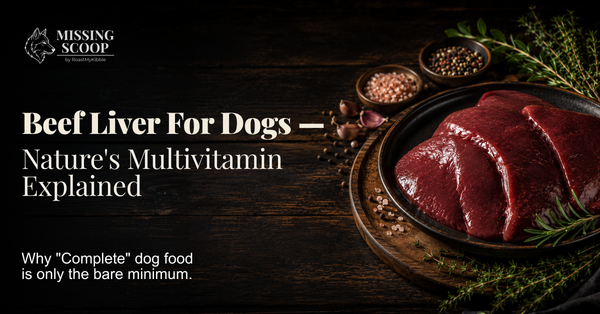
Liver is the undisputed king of organ meats. Period. It is loaded to the brim with Vitamin A, B vitamins, iron, and copper. If your dog has a crappy, dull coat, constant skin allergies, or brittle nails, a lack of liver in their diet is almost always the hidden culprit.
2. Beef or Chicken Heart (The Heavy Lifter)
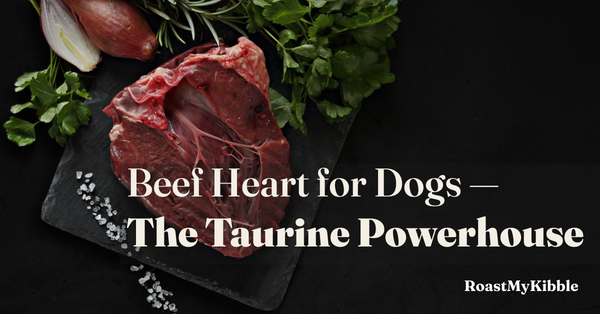
Technically, the heart is classified as a muscle meat. But nutritionally, it behaves exactly like a super-dense organ. Because the heart is a non-stop, hard-working muscle, it contains crazy high concentrations of Taurine and Coenzyme Q10 (CoQ10).
Taurine is an amino acid that your dog absolutely needs for a healthy heart—especially large breeds or dogs prone to heart failure. We covered the ongoing FDA investigation into DCM and pea-heavy diets in detail, but here's the short version: taurine deficiency is one of the leading theories for why some grain-free foods may damage cardiac function. Heart meat is the richest natural source.
CoQ10 is a massive cellular antioxidant that keeps an old dog's heart pumping strong. If you want your senior dog to keep bouncing around like a puppy, heart meat is the raw fuel that makes it happen.
3. Beef Kidney (The Overlooked One)
Kidney doesn't get the glory that liver and heart enjoy, but it pulls its weight. It's rich in selenium—a mineral critical for thyroid function and immune health—plus a heavy dose of B vitamins. If you're doing rotational feeding, kidney deserves a slot in the mix.
H2: How Do I Actually Feed Organs to My Dog? (Real-World Scenarios)
Prepping organs in a real kitchen feels totally different depending on what kind of dogs are staring at you from the kitchen floor. The math is the same, but the execution changes.
Scenario A: The Massive Pack (Two 70-lb Pit Mixes)
Let's say you're cooking for two big, high-energy Pit Bull mixes. These guys burn through calories like crazy and need a serious volume of real food to keep their muscle mass up and their joints from getting stiff.
When you're batch-cooking a huge 15-pound run of meat in a big 8-quart Instant Pot to last them for the next several days, you're going to need a decent amount of organs. You'll be throwing in a full 12 ounces of beef liver and 12 ounces of beef heart right alongside your bulk ground turkey or beef trimmings.
Because big, chesty dogs are super prone to early joint issues and heart stress, that massive hit of natural CoQ10 and copper is literally preventative medicine. Within a few weeks of eating this heavy-duty food, you'll notice that classic "pit bull coat shine" come back, their red skin rashes will clear up, and you can finally stop dealing with the random digestive bloat that comes with cheap, carb-heavy kibble.
Scenario B: The Tiny Breed (A 15-lb Frenchie)
Now look at the other side: a single, 15-pound French Bulldog with a super finicky, sensitive stomach. A little dog like this eats almost nothing compared to a big pack, so your weekly batch-cook might only be 2 or 3 pounds of total meat.
For a small dog, you need a cheap digital kitchen scale. You only need about 1.6 ounces of liver for the whole week's batch. And because Frenchies are famous for terrible gas and weird digestion, you can't just throw raw, slippery chunks of rich organ meat into the bowl.
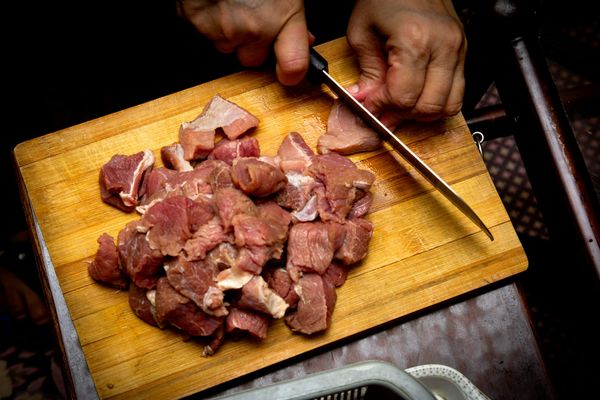
Instead, you want to lightly pressure-cook that tiny bit of liver and heart right in the pot with the ground turkey and sweet potatoes, and then finely mash or blend it all together. Because it's totally hidden and mixed into the recipe, their sensitive stomach handles the rich nutrients perfectly without getting shocked, and you completely eliminate the silent-but-deadly sulfur gas that keeps you awake at night.
H2: What Is the 80/10/10 Rule for Homemade Dog Food?
The 80/10/10 framework is a simple starting ratio for balanced homemade dog food: 80% muscle meat, 10% bone, 10% secreting organs. Of that organ portion, roughly half should be liver and half should be other organs like kidney, spleen, or brain. Heart counts as muscle meat in this ratio, not organ meat, despite its nutrient density.
This isn't a complete, vet-approved recipe on its own—you still need to think about fiber, omega-3s, and variety—but it's the foundational math that keeps your dog from sliding into deficiency. If you remember nothing else, remember this: every batch of homemade food needs a little liver. Without it, the math doesn't work.
H2: Frequently Asked Questions About Feeding Organs to Dogs
Q: What if my dog sniffs the organ meat and refuses to eat it?
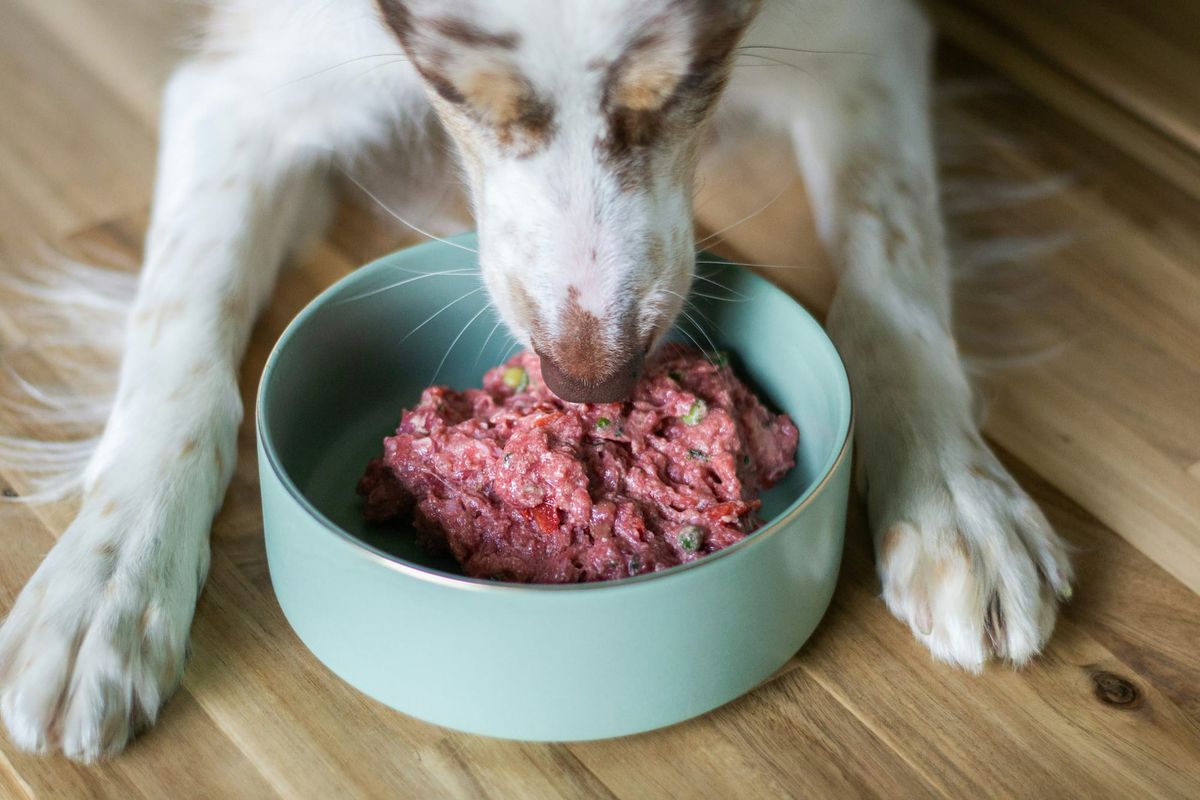
Some dogs are totally addicted to the artificial flavor enhancers and animal fats sprayed onto kibble. They might look at a piece of liver and walk away. The fix: lightly cook it. A little heat releases the natural fats and smells, making it irresistible. You can also chop it super fine or blend it into warm sweet potato or pumpkin. They won't know it's there, but their body still gets all the benefits.
Q: Can I use pork or chicken organs instead of beef?
Yes, absolutely. Ruminant organs (beef, lamb, bison) are usually the most nutrient-dense, but chicken, turkey, and pork organs are excellent alternatives. Chicken liver is easy to find at normal grocery stores, cheap, and has a milder taste that picky dogs tolerate better. Rotate them—beef this week, chicken the next.
Q: Is it safe to feed rich organs if my dog has had pancreatitis?
Yes, but be smart about it. Organ meats are rich in vitamins but aren't loaded with the greasy, processed fats that trigger pancreatitis flare-ups. If your dog has a sensitive pancreas, stick to lean organs like chicken liver or beef heart, cook them thoroughly, and keep them strictly locked into the 5-10% ratio. Don't overdo it.
Q: Am I going to get sick handling raw organs?
Treat your dog's organ meats the exact same way you treat raw chicken you're making for yourself. Wash your hands, wash your cutting board, and don't be gross. If you're throwing everything into an Instant Pot or simmering it on the stove, the heat kills any bad bacteria while keeping the nutrients intact.
Q: What if I can't find organs at my local grocery store?
This is frustratingly common. Ethnic markets, local butchers, and farmers' markets are your best bets—they often carry organs that big-chain grocery stores don't stock. If sourcing fresh organs is a constant headache, there's a shortcut that gives your dog the exact same nutrition without the scavenger hunt. We'll cover that next.
Your No-BS Plan to Get Started Tonight
Stop letting internet experts overcomplicate this for you. You don't need a fancy certification to start improving your dog's health tonight.
If you're sick of commercial recalls and want to give your dog real food, just use the basic 80/10/10 framework. Grab a clean, cheap source of ground protein, pick up a small tub of chicken or beef liver from the store, and throw it in a pot with some sweet potato and a handful of frozen blueberries.
Watch how intensely your dog stares at the kitchen counter while it's cooking, and watch how insanely clean those bowls are when they're done. Taking control of your pet's health starts with a single slice of liver.
Don't want to cook? There's a shortcut that gives your dog all the organ nutrition without touching a single raw liver. Here's why freeze-dried organs might be the smarter play.
Have you added organs to your dog's homemade food yet? What worked and what freaked you out? Drop your experience in the comments—the good, the bad, and the gas-related.