Ingredient Splitting: How Dog Food Labels Hide Cheap Fillers in Plain Sight
Think meat is #1? Learn how manufacturers use "Ingredient Splitting" to make grains look like minor players on the label.
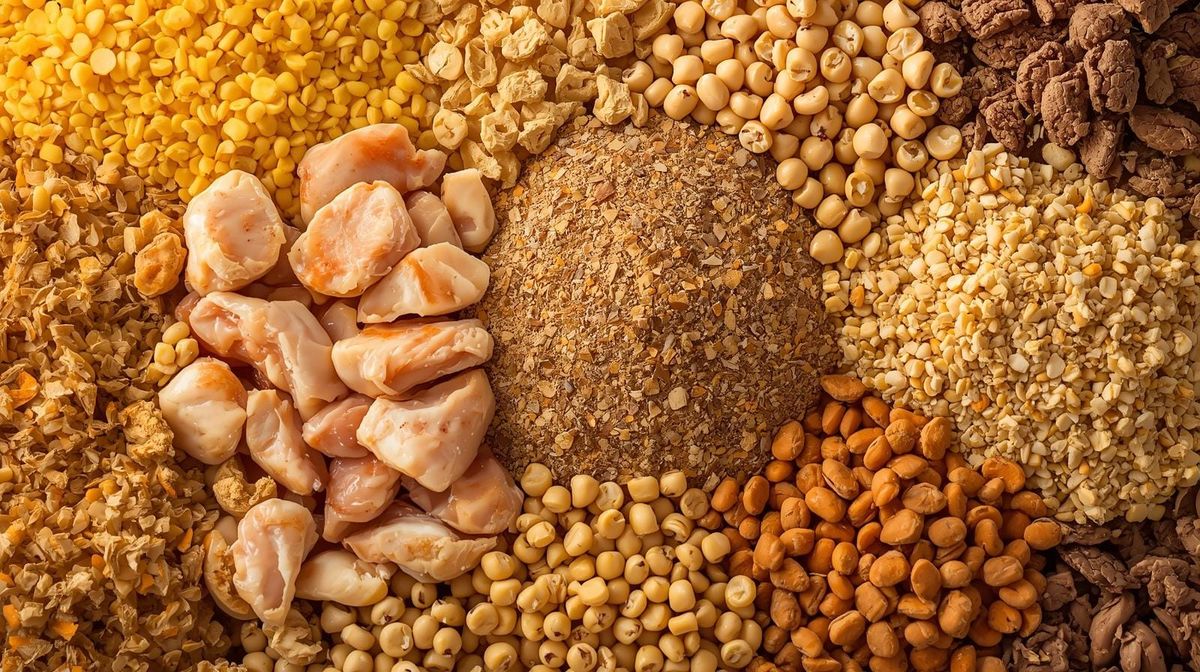
You pick up a bag of dog food. The first ingredient says "Chicken." Good start. You feel like you're making a smart, informed choice.
Then you scan down. "Corn gluten meal." Fine, it's at #4. "Corn flour." #7. "Corn bran." #9. Each one looks small. Each one looks like a minor inclusion. But add them together — mentally recombine all the corn fragments — and suddenly corn outweighs the chicken at #1. Your "chicken-first" food is actually a corn-based formula with a poultry cameo.
This is ingredient splitting. It's legal. It's intentional. It's been used for decades by some of the biggest names in the industry. And once you see it, you can't unsee it.
We introduced the concept in our guide on how to read a dog food label. This is the standalone deep dive — what ingredient splitting is, why brands use it, which ones are the worst offenders, and how to spot it before the bag hits your cart.
How Does Ingredient Splitting Work?
Ingredients on a dog food label must be listed in descending order by weight before cooking. By breaking a single cheap ingredient into multiple sub-components — "corn, corn gluten meal, corn flour, corn bran" — each fragment appears individually smaller and lower on the list. A named meat claims the #1 position. The combined plant ingredients dominate the formula.
The trick exploits a labeling loophole: ingredients are listed individually by weight, even when they're derivatives of the same source. The manufacturer isn't lying. Corn, corn gluten meal, and corn flour are technically distinct ingredients. They just all happen to come from the same corn kernel, and together they represent a larger share of the formula than the chicken at the top.
The same technique works with:
- Peas: "Peas, pea protein, pea starch, pea fiber" — combined, often the dominant ingredient in "grain-free" formulas
- Rice: "Brewer's rice, rice bran, rice flour" — the beer waste special
- Potatoes: "Potatoes, potato protein, potato starch" — same game, different starch
We've documented ingredient splitting in Purina Pro Plan, Royal Canin, and Blue Buffalo. It's not a budget-brand trick. It's an industry-wide practice that spans price points and marketing tiers.
Why Do Brands Use Ingredient Splitting?
Ingredient splitting serves two purposes: it allows a named meat to claim the #1 position on the ingredient panel — satisfying the consumer who's been trained to look for "meat first" — while keeping the actual cost of goods low by using cheap plant ingredients as the real caloric and protein base of the food.
The consumer sees "Chicken" at #1 and feels good about the purchase. The manufacturer knows that after extrusion — when the water weight cooks off — the food is predominantly corn, peas, or rice. Both parties get what they want. The dog gets the formula nobody's advertising.
How to Spot It in 5 Seconds
Scan the first ten ingredients. If you see multiple forms of the same grain, pea, rice, or potato — "corn" AND "corn gluten meal," "peas" AND "pea protein" — mentally combine them. If the combined total would outweigh the meat at #1, you've been split.
Our 5-Second Dog Food Label Lie Detector has this as question two. Run every bag you buy through it. The brands that fail are the brands that prioritized label engineering over ingredient quality.
Frequently Asked Questions About Ingredient Splitting
Q: Is ingredient splitting illegal?
No. It's perfectly legal. Each sub-ingredient is listed correctly by weight. The deception is in the fragmentation, not the listing.
Q: Is ingredient splitting the same as having multiple protein sources?
No. A food that lists "chicken, chicken meal, salmon meal" is providing multiple named animal proteins. That's variety. Ingredient splitting is breaking one cheap plant ingredient into fragments to bury it on the label.
Q: Do any brands not use ingredient splitting?
Yes. Brands that use whole ingredients and don't rely on plant protein concentrates — like the ones on our Safe List — have no need to split. A single "chicken meal" at #1 tells you more than "chicken" followed by four corn derivatives.
What to Do Right Now
Grab your dog's food bag. Look at the first ten ingredients. Do you see multiple forms of the same grain, pea, or potato?
If yes, mentally recombine them. If corn, peas, or rice would beat the meat at #1, the label lied to you — legally, intentionally, and successfully. Switch to a food that doesn't need a thesaurus to hide what's actually in the bag.
Found ingredient splitting in your dog's food? Drop the brand and the combined filler in the comments. Let's see who's hiding corn behind a wall of synonyms.