Is Your Homemade Dog Food Missing This? The Deficiency Most Home Cookers Overlook
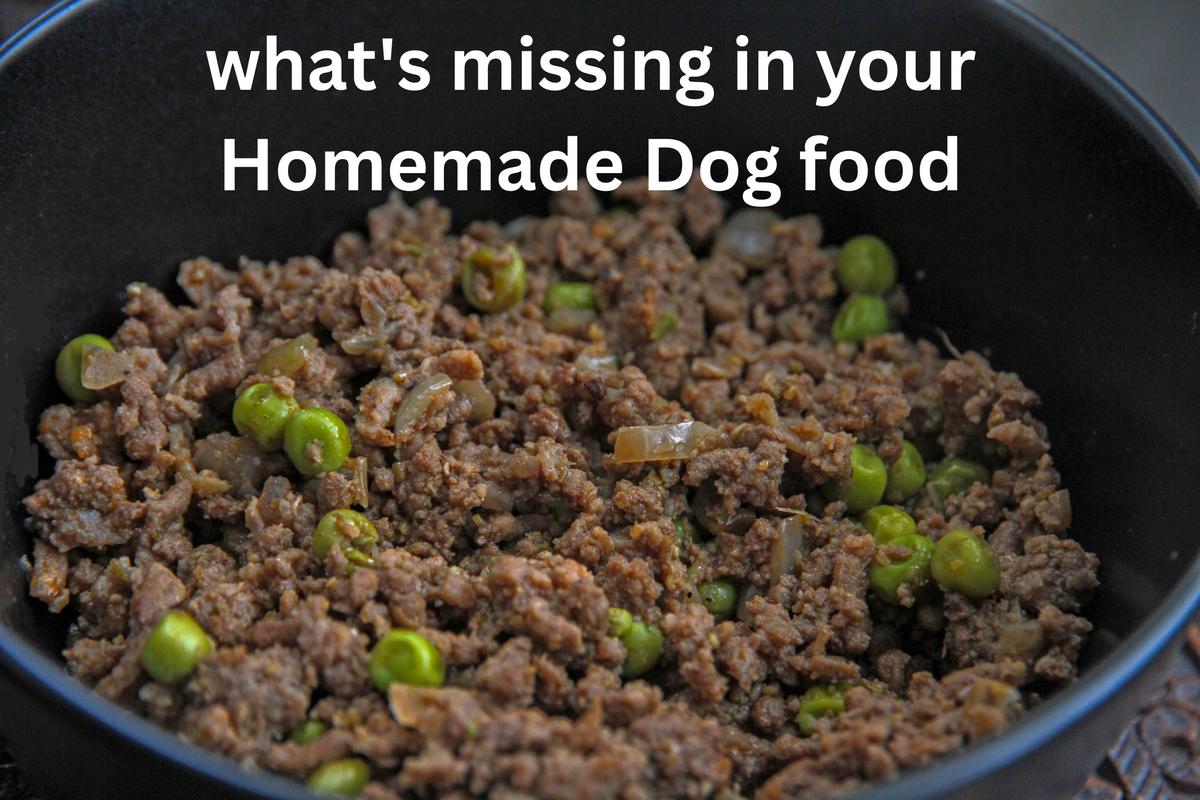
You ditched the kibble. You're cooking real food for your dog — ground turkey, sweet potatoes, green beans, maybe some brown rice. You feel good about it. You should. It's objectively better than a bag of extruded corn, anonymous animal fat, and synthetic vitamin spray dressed up as "ancestral nutrition."
But here's the uncomfortable truth: if you're only feeding muscle meat and vegetables, you're accidentally starving your dog of the exact nutrients that make homemade food worth doing.
Wolves don't eat chicken breast and broccoli. They rip into the belly first. Liver. Heart. Kidney. The parts richest in vitamins, minerals, and the compounds that keep a carnivore alive. When you leave those out, your homemade diet is unbalanced — and the kibble industry is counting on you to fail so they can point and say, "See? Home cooking is dangerous. You need our science-backed brown pellets."
A study published in the Journal of Nutritional Science analyzed homemade dog food recipes and found that the vast majority were deficient in multiple essential nutrients. The most common deficiencies? Vitamin A, copper, calcium, zinc, and B12. Notice the pattern. Every single one of those nutrients is concentrated in liver. The one ingredient most home cookers leave out.
Let's fix that. Here are the five nutrients most homemade dog food is missing — and the one ingredient that supplies all of them.
What's Missing From Most Homemade Dog Food?
Most homemade dog food recipes are built on muscle meat, vegetables, and grains. This combination is deficient in vitamin A, copper, B12, iron, and folate — all of which are concentrated in organ meats and almost entirely absent from muscle tissue and plant ingredients.
| Missing Nutrient | Why It Matters | Where It's Found | Consequences of Deficiency |
|---|---|---|---|
| Vitamin A | Skin barrier, vision, immune function | Beef liver | Dry skin, dull coat, night blindness, infections |
| Copper | Collagen cross-linking, joint integrity, coat color | Beef liver | Joint weakness, dull coat, anemia |
| B12 | Myelin maintenance, nerve function, energy | Beef liver, heart | Lethargy, cognitive dysfunction, anemia |
| Iron | Oxygen transport, energy production | Beef liver, kidney, heart | Anemia, weakness, pale gums |
| Folate | DNA repair, cell division | Beef liver | Poor growth, anemia, immune dysfunction |
A diet of chicken, rice, and carrots is not a complete diet. It's a deficiency waiting to happen. And the deficiencies develop slowly — subtle at first, then undeniable. The dull coat that won't respond to fish oil. The low energy that isn't explained by thyroid tests. The stiffness in a dog too young for arthritis. Owners spend months chasing symptoms before realizing the problem was the recipe.
We covered this in full detail in our organ meat for dogs guide — the foundational post that explains why organs are non-negotiable in any diet, homemade or commercial.
The 80/10/10 Rule: Your Shortcut to Balance
The 80/10/10 framework is a starting ratio for balanced homemade dog food: 80% muscle meat, 10% bone, 10% secreting organs. Of the organ portion, roughly half should be liver and half should be other organs like kidney, spleen, or brain. Heart counts as muscle meat in this ratio, despite its nutrient density.
This isn't a complete, vet-approved recipe on its own — you still need to think about fiber, omega-3 fatty acids, and variety. But it's the foundational math that keeps your dog from sliding into deficiency. If you remember nothing else from this post, remember this: every batch of homemade food needs a little liver. Without it, the math doesn't work.
How to Balance a Homemade Diet in One Step
Add liver to whatever you're already cooking. Liver at 5% of the diet by weight. Heart at 5–10% as part of the muscle meat portion. This single addition closes the micronutrient gap in most homemade recipes.
You don't need to throw out your current recipe. You don't need a board-certified nutritionist. You need a small piece of liver in every batch. That's the difference between a meal that sustains and a meal that helps your dog thrive.
For a 50-pound dog eating about 1 pound of food daily, that's roughly 0.8 ounces of liver per day. Cooked or raw. Fresh or freeze-dried. However it gets into the bowl, get it there.
Frequently Asked Questions About Homemade Dog Food
Q: Can I just follow a recipe from the internet?
Some recipes are well-formulated. Most are not. The Journal of Nutritional Science study found that the majority of publicly available homemade dog food recipes — including some from veterinarians — were deficient in at least one essential nutrient. If the recipe doesn't include organ meat, specifically liver, it's almost certainly not balanced. Full stop.
Q: Is it expensive to add organs?
Beef liver costs $2–4 per pound. Beef heart is similarly priced. A pound of liver for a medium dog lasts weeks. It is the cheapest health insurance you will ever buy for your dog.
Q: What if I can't find organs at my grocery store?
Ethnic markets, local butchers, and farmers' markets are reliable sources. Many conventional grocery stores carry chicken liver in the frozen section. If sourcing fresh organs is a persistent frustration, Missing Scoop delivers freeze-dried liver, heart, and kidney in a scoop — shelf-stable, nutrient-intact, no hunting required.
Q: Can I feed too much liver?
Yes. Vitamin A toxicity is real at chronic high doses — roughly 2,500–5,000 IU per pound of body weight per day over weeks to months. At the recommended 5% liver in the diet, a 50-pound dog receives approximately 3,800 IU of vitamin A per day, well below the toxic threshold. Toxicity requires feeding liver as a main course, not a supplement.
What to Do This Week
Go to the grocery store. Buy a package of beef liver. Add a small piece — about the size of your thumb — to your next batch of homemade food. That's it. Your dog's bowl just went from incomplete to optimal in one ingredient.
If you've been cooking for your dog for months without organs, don't panic. Deficiencies develop slowly and correct slowly. Start now. Be consistent. Your dog's body will use what you give it.
Do you cook for your dog? What's in your recipe — and do you include organs? Drop your go-to recipe in the comments. Let's compare notes and close the gaps.