Garlic in Dog Food: Healthy Supplement or Oxidative Threat?
Some swear by it, but in processed food, Garlic can be a red flag. Explore the risks of oxidative damage to red blood cells.
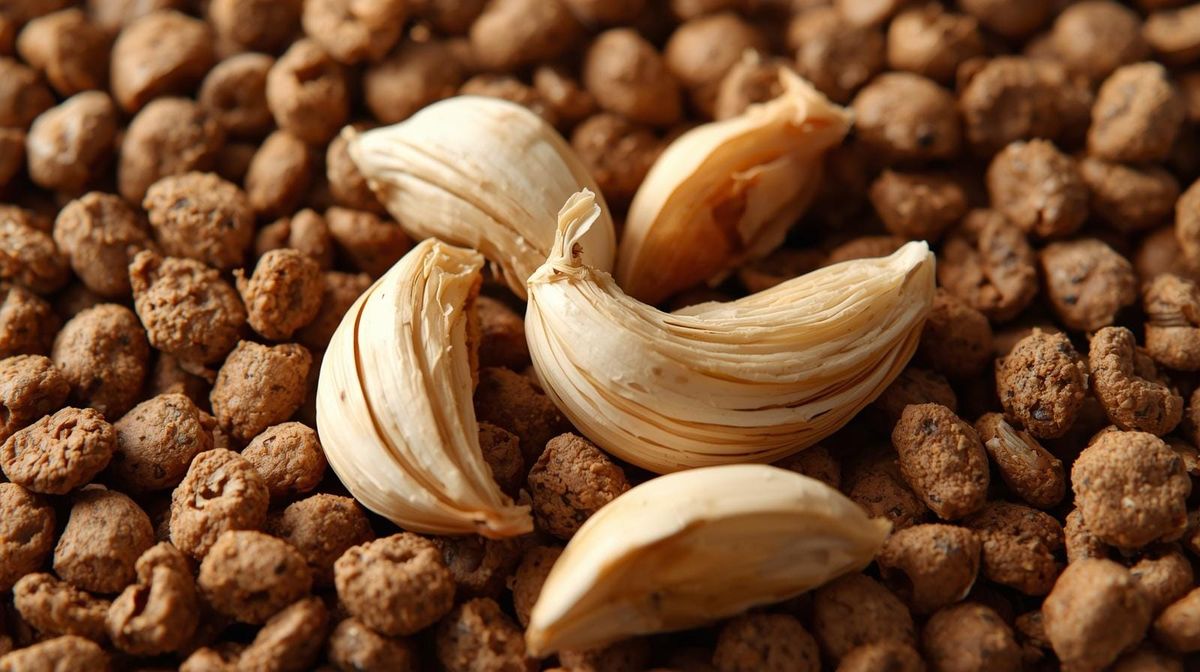
Garlic occupies a strange middle ground in canine nutrition. Some holistic pet owners swear by it — a tiny sprinkle of garlic powder to repel fleas, support immunity, add flavor. Others treat it like poison. The truth, as usual, is messier than either camp wants to admit.
Garlic contains thiosulfate, a compound that can cause oxidative damage to canine red blood cells. At high enough doses — or cumulative low doses over time — that damage leads to Heinz body anemia, a condition where red blood cells become fragile, rupture, and fail to carry oxygen. It's not an instant reaction. It's a slow, cumulative one. And by the time symptoms appear — lethargy, pale gums, rapid breathing — the damage is already done.
But here's where it gets complicated: garlic is also a common ingredient in commercial dog food and treats. It's used as a flavor enhancer. It's marketed as a natural flea repellent. It shows up in "holistic" formulas that claim to support immune function. Some brands include it. Some don't. The FDA doesn't ban it. AAFCO doesn't set a safe upper limit for it in pet food.
So is garlic a harmless botanical or a slow-acting toxin? Let's look at what the research actually says — and why the safest path is the simplest one.
What Does Garlic Do to a Dog's Body?
Garlic contains thiosulfate, a sulfur-containing compound that dogs cannot efficiently metabolize. In sufficient quantities, thiosulfate causes oxidative damage to hemoglobin — the oxygen-carrying protein in red blood cells. Damaged hemoglobin precipitates into structures called Heinz bodies, which mark the red blood cell for destruction by the spleen. The result is Heinz body anemia: a progressive loss of functional red blood cells.
The toxic mechanism is well-documented. Research published in the American Journal of Veterinary Research has demonstrated that Allium species — garlic, onion, leek, chives — cause dose-dependent oxidative damage to canine erythrocytes. A study in the Journal of Veterinary Medical Science found that dogs fed garlic extract developed Heinz bodies in their red blood cells within days, with the severity proportional to the dose.
The key variable is dose. A single clove of garlic isn't going to kill a Labrador. But repeated, cumulative exposure — the kind that happens when garlic is a listed ingredient in a daily food — is a different scenario. The damage accumulates. Red blood cells are produced and destroyed continuously. If the bone marrow can't keep up with the destruction rate, anemia develops. Slowly. Silently.
The toxic dose for dogs is generally cited as 15–30 grams of garlic per kilogram of body weight. That's roughly 3–4 cloves for a 20-pound dog. But that's the acute toxic dose — the amount that causes immediate, obvious symptoms. Chronic low-dose exposure is harder to study and harder to diagnose, because the symptoms — mild lethargy, slightly pale gums, reduced exercise tolerance — are easy to miss or attribute to other causes.
Why Is Garlic in Dog Food at All?
Garlic appears in commercial dog food for three reasons: as a flavor enhancer (palatability), as a marketing claim ("natural flea repellent"), and as a botanical ingredient in "holistic" formulas. Its presence is legal. The FDA does not prohibit garlic in pet food. AAFCO does not regulate it.
The "natural flea repellent" claim deserves special scrutiny. The theory is that garlic consumed by the dog makes their blood less appealing to fleas and ticks. There is limited anecdotal support for this and almost no rigorous scientific evidence. A handful of small studies have suggested that garlic extract may have some insect-repelling properties, but the data is thin and inconsistent.
More importantly: even if garlic does provide some mild flea deterrence, there are effective, safe, veterinarian-recommended flea preventatives that don't carry the risk of cumulative oxidative damage. Risking Heinz body anemia for an unproven flea benefit is not a trade worth making.
What's the Difference Between Fresh Garlic and Garlic Powder in Kibble?
Garlic powder in processed dog food is a concentrated form of garlic. The dehydration process removes water but preserves the thiosulfate compounds that cause oxidative damage. Gram for gram, garlic powder is more potent than fresh garlic because the water weight is gone.
This is an important distinction. When you see "garlic" or "garlic powder" on an ingredient panel, you're not looking at a fresh clove. You're looking at a dehydrated, concentrated form of the same plant that causes Heinz body anemia in dogs. The processing doesn't neutralize the thiosulfate. It concentrates it.
Are Some Dogs More at Risk?
Japanese breeds — Akitas, Shiba Inus, and related breeds — have a higher prevalence of hereditary Heinz body formation and may be more sensitive to oxidative damage from garlic. Anemic dogs, dogs with liver disease, and dogs on medications that affect red blood cell production are also at elevated risk.
A study published in the Journal of Veterinary Internal Medicine documented that certain Japanese breeds have a genetic predisposition to Heinz body formation even without garlic exposure. Adding garlic to their diet is pouring fuel on a smoldering fire.
But the risk isn't limited to predisposed breeds. Any dog receiving chronic, low-dose garlic exposure is running a cumulative risk. The dog who's been eating garlic-containing kibble for three years with no obvious symptoms may have a marginally lower red blood cell count, marginally lower oxygen-carrying capacity, marginally lower energy — all written off as "getting older" or "just lazy."
Which Brands Use Garlic in Their Dog Food?
Garlic appears in various "holistic" and "natural" dog food brands, often in small amounts listed toward the bottom of the ingredient panel. It's less common in veterinary prescription diets and basic grocery brands, which rely on other palatability enhancers.
Because garlic is not required to be disclosed at specific concentrations, there's no way to know exactly how much is in any given food. The ingredient panel tells you it's there. It doesn't tell you how much. That uncertainty — combined with the known risk of cumulative oxidative damage — is precisely the problem.
What's the Safer Alternative?
Garlic-free dog food eliminates the cumulative risk entirely. If you want immune support, beef liver provides bioavailable vitamin A, zinc, and selenium without the oxidative risk. If you want palatability, a whole-food topper — freeze-dried organ meat, bone broth, or even warm water — enhances flavor without adding a potential toxin.
We've documented the immune benefits of beef liver and kidney and the cardiac support provided by beef heart. These are whole foods that deliver measurable nutritional benefits without the gamble.
For flea prevention, use a veterinarian-recommended preventative. Garlic is not a substitute. The risk of anemia is real. The evidence for flea deterrence is weak. The math doesn't work.
Frequently Asked Questions About Garlic and Dogs
Q: Can a tiny amount of garlic hurt my dog?
A single small exposure — a bite of garlic bread, a piece of chicken cooked with garlic — is unlikely to cause acute toxicity in a medium or large dog. The concern is cumulative, chronic exposure through daily food. Small amounts add up over time.
Q: Is garlic safe for dogs in any amount?
Some holistic practitioners argue that micro-doses of garlic are safe and beneficial. The research on chronic low-dose exposure is limited. Given what we know about the mechanism of oxidative damage and the availability of safer alternatives, the risk-benefit calculus favors avoidance.
Q: What are the symptoms of garlic toxicity in dogs?
Lethargy, pale gums, rapid breathing, weakness, dark-colored urine, and collapse in severe cases. Symptoms may not appear for days after ingestion because the damage is cumulative and delayed.
Q: Is garlic powder worse than fresh garlic?
Yes. Garlic powder is dehydrated and concentrated. Gram for gram, it contains more thiosulfate than fresh garlic. It's also the form most commonly used in processed dog food.
Q: What should I do if my dog ate garlic?
If your dog ate a large quantity of garlic — several cloves, a whole bulb, a dish heavily seasoned with garlic powder — contact your veterinarian immediately. If it's been less than two hours, vomiting may be induced. If longer, supportive care and blood monitoring may be necessary.
What to Do Right Now
Flip over your dog's food bag. Scan the ingredient panel. Do you see "garlic," "garlic powder," or "garlic extract" listed anywhere?
If yes, ask yourself: is the unproven flea benefit worth the documented oxidative risk? Is the flavor enhancement worth the cumulative damage to red blood cells? In a world where beef liver delivers real immune support without the gamble and Missing Scoop adds whole-food nutrition in a single scoop, garlic is a risk your dog doesn't need.
Checked your dog's food bag? Found garlic? Tell me the brand in the comments. Let's see how many "holistic" formulas are seasoning their kibble with a known canine toxin.