Why Is My Dog Lethargic? Anemia, Iron Deficiency, and What Most Bowls Are Missing

Your dog is sleeping more than usual. They're not excited for walks. They used to sprint to the door when you grabbed the leash — now they barely lift their head. Maybe their gums look pale. Maybe they're panting after minimal exercise. You've Googled "why is my dog so tired" at 11 PM and found everything from thyroid disease to cancer.
Before you spiral, consider the simplest explanation: your dog might not be sick. They might be iron-deficient.
Iron-deficiency anemia is one of the most common and most overlooked nutritional deficiencies in dogs. It's almost never caused by a lack of food. It's caused by a lack of the right food — specifically, the iron-rich organ meats that most commercial and homemade diets leave out entirely.
The fix isn't a prescription. It's not a synthetic supplement. It's beef liver. And beef kidney. And they've been sitting in the grocery store for $3 a pound while your dog gets more tired.
What Are the Signs of Iron Deficiency in Dogs?
The most common signs of iron-deficiency anemia in dogs are lethargy, pale gums, rapid breathing, decreased appetite, and exercise intolerance. These symptoms develop gradually as red blood cell production declines, reducing oxygen delivery to tissues.
Iron is the central atom in hemoglobin — the protein in red blood cells that carries oxygen from the lungs to every cell in the body. When iron is low, hemoglobin production drops. When hemoglobin drops, oxygen delivery drops. When oxygen delivery drops, everything slows down.
Early signs are subtle: your dog sleeps more, plays less, tires faster on walks. As deficiency progresses, gums turn from bubblegum pink to pale or white. Breathing becomes shallow and rapid because the body is trying to compensate for low oxygen. Appetite declines — not because the stomach is upset, but because the entire system is running on empty.
Veterinarians diagnose anemia with a simple blood test measuring packed cell volume (PCV) and hemoglobin. If your dog is showing multiple symptoms, a vet visit is warranted. But many dogs live in a gray zone — not clinically anemic, but suboptimal. Low-normal iron. Low-normal energy. They're not sick enough to test. They're just tired.
What Causes Iron Deficiency in Dogs?
Iron deficiency in dogs is most commonly caused by chronic blood loss (parasites, ulcers), but dietary insufficiency is a significant and underrecognized contributor. Diets heavy in grains, fillers, and muscle meat — with little to no organ meat — provide inadequate bioavailable iron.
There are two forms of dietary iron: heme and non-heme. Heme iron comes from animal tissue — specifically from blood-rich organs like liver, kidney, and heart. It's highly bioavailable, meaning your dog's body can absorb and use it efficiently. Non-heme iron comes from plants and synthetic supplements. It's poorly absorbed and requires acidic conditions and cofactors to be utilized.
Most commercial kibbles rely on synthetic iron supplements — ferrous sulfate, iron oxide — to meet AAFCO minimums on paper. These are non-heme sources. Your dog absorbs a fraction of what's listed. The rest passes through undigested.
Homemade diets face a different problem. Owners cook chicken breast, ground turkey, lean beef — all muscle meat, all low in iron. A 100-gram serving of chicken breast contains 0.7 mg of iron. The same amount of beef liver contains 4.9 mg — seven times more. Beef kidney contains 3.2 mg. The organs are where the iron lives. Most bowls never see them.
Which Organ Meats Are Highest in Iron?
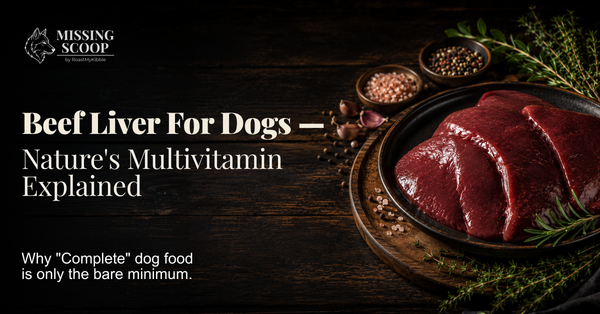
Beef liver and beef kidney are the richest natural sources of heme iron available to dog owners. A 100-gram serving of beef liver provides approximately 4.9 mg of highly bioavailable iron — seven times the iron content of chicken breast. Beef kidney provides approximately 3.2 mg per 100 grams.
| Organ Meat | Iron (per 100g) | Also Rich In |
|---|---|---|
| Beef Liver | 4.9 mg | Vitamin A, B12, copper, folate |
| Beef Kidney | 3.2 mg | Selenium, B vitamins |
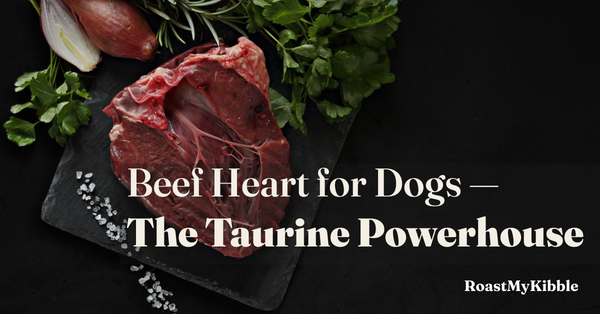
| Beef Heart | 4.3 mg | Taurine, CoQ10 |
| Chicken Liver | 8.9 mg | Vitamin A, B12, folate |
| Chicken Breast (comparison) | 0.7 mg | — |
Chicken liver actually has higher iron concentrations than beef liver, but it's harder to source and some dogs find the flavor too strong. Beef liver is the practical recommendation — widely available, nutrient-dense, and well-tolerated at appropriate amounts.
We covered liver's full nutritional profile in our beef liver deep dive. The short version: it's the single most nutrient-dense food you can put in your dog's bowl. Iron is just one line on a very long list.
How Much Liver or Kidney Should I Feed for Energy Support?
Liver should make up approximately 5% of your dog's total diet by weight. For a 50-pound dog eating about 1 pound of food daily, that's roughly 0.8 ounces (22 grams) of liver per day. Kidney can be fed in similar amounts as part of the organ rotation.
At recommended amounts, liver provides a meaningful iron boost without risking vitamin A toxicity. A 50-pound dog receiving 0.8 ounces of beef liver daily gets approximately 1.1 mg of supplemental heme iron — highly absorbable, cofactor-rich, and far more effective than a synthetic iron pill.
If your dog has diagnosed anemia, follow your veterinarian's guidance on supplementation. If your dog is simply low-energy with no clinical diagnosis, adding liver to the diet is a safe, food-based intervention with no downside at recommended amounts.
Frequently Asked Questions About Dog Lethargy and Diet
Q: How long does it take for iron from liver to improve energy?
Red blood cell production takes approximately 2–3 weeks. Most owners report noticeable improvements in energy and gum color within 3–4 weeks of consistent liver feeding.
Q: Can I feed chicken liver instead of beef liver for iron?
Yes. Chicken liver is even higher in iron per gram than beef liver. It's also easier to find in some regions. Rotate between beef and chicken for variety.
Q: Is iron toxicity a risk with organ meats?
Iron toxicity is extremely rare from food sources. The body regulates heme iron absorption based on need. Synthetic iron supplements pose a higher risk because they bypass this regulation. At recommended feeding amounts, organ meats are safe.
Q: My dog is lethargic but the vet says bloodwork is normal. Could diet still be the issue?
Yes. "Normal" bloodwork means your dog isn't clinically anemic. It doesn't mean they're at optimal iron levels. Many dogs function in the low-normal range with corresponding low-normal energy. Dietary improvement can shift them toward optimal without ever crossing a clinical threshold.
What to Do This Week
Add liver. Beef liver, chicken liver — raw, cooked, or freeze-dried. A small amount every day. Watch your dog over the next 3–4 weeks. You'll see the gums pink up first. Then the energy returns. Then one day you grab the leash and they're already at the door, and you remember what they were like before the bowl was missing what it needed.
And if sourcing and handling raw liver sounds like more than you want to take on — Missing Scoop is freeze-dried beef liver, heart, and kidney. One scoop. No prep. No sourcing. The same heme iron and B12 that bring a tired dog back to life. Join the waitlist.
Has your dog struggled with low energy? What did you try — and what actually worked? Drop your experience in the comments.