Dog Dull Coat? Dry Skin? The Missing Nutrient Isn't Fish Oil — It's Liver
If your dog has a dull coat, dry skin, or constant itching, the missing nutrient is probably vitamin A — and fish oil won't fix it. Here's why beef liver is the real solution.
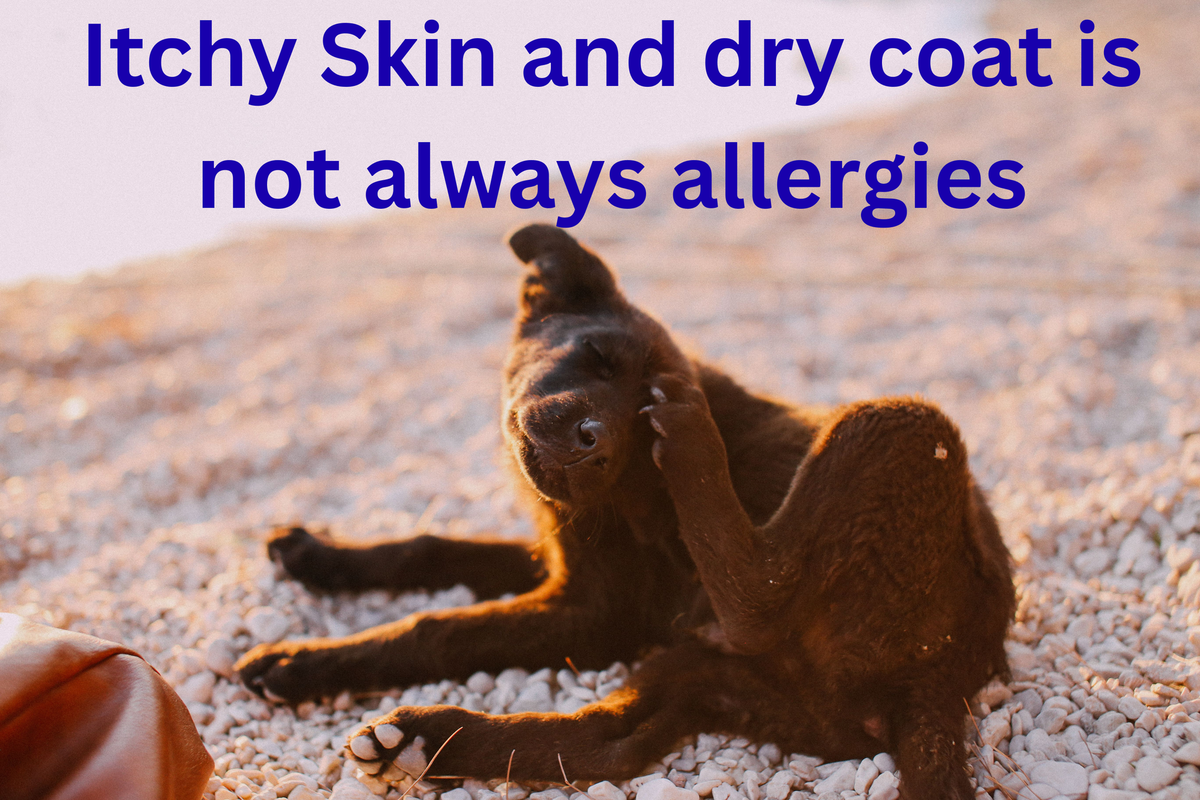
Your dog's coat is dull. Their skin is dry and flaky. Maybe they're itching constantly — licking their paws, rubbing their face on the carpet, leaving a trail of dander everywhere they go.
You've tried fish oil. The internet told you omega-3s would fix everything. You've been pumping salmon oil into their bowl for weeks. The coat is still dull. The skin is still dry. The itching hasn't stopped.
Here's what nobody told you: your dog probably isn't deficient in omega-3s. They're deficient in vitamin A. And the richest natural source of vitamin A on the planet isn't a fish — it's beef liver.
The pet food industry knows this. It's why prescription diets for skin conditions are basically liver nutrition delivered through a chemistry set. It's why the synthetic vitamin spray on kibble includes retinyl palmitate — a lab-made vitamin A analog. They know vitamin A matters. They just won't tell you the whole-food source is sitting in the grocery store for $3 a pound.
Let's fix your dog's coat. Not with another bottle of oil. With the organ meat their ancestors ate first.
Why Does My Dog Have a Dull Coat and Dry Skin?
A dull coat and dry, flaky skin in dogs is often a sign of micronutrient deficiency — most commonly vitamin A, but also copper, zinc, and B vitamins. These nutrients are abundant in liver and almost entirely absent from muscle meat, grains, and most commercial kibble unless added synthetically.
Vitamin A is essential for skin cell turnover and sebum production — the natural oil that keeps your dog's coat shiny and their skin moisturized. Without enough vitamin A, skin cells don't regenerate properly. The outer layer becomes dry, thickened, and prone to flaking. The coat loses its luster because the hair follicles aren't receiving the nutrients they need to produce healthy hair.
Copper is required for melanin production — the pigment that gives your dog's coat its rich color — and for the cross-linking of collagen and elastin that keeps skin elastic. Zinc is critical for wound healing and immune function at the skin barrier. B vitamins, especially biotin and B12, are cofactors in fatty acid metabolism and cell division.
Here's the thing: fish oil provides omega-3 fatty acids, which reduce inflammation. That's useful. But if the root cause is a vitamin A or copper deficiency, fish oil is treating a symptom, not the problem. Your dog's skin isn't inflamed because they lack fish oil. It's inflamed because the skin barrier is failing — and vitamin A is what maintains that barrier.
What Nutrients Does Beef Liver Provide for Skin and Coat?
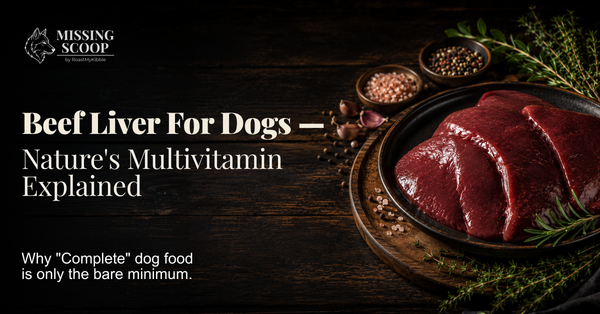
Beef liver is the most concentrated natural source of vitamin A, copper, zinc, and B vitamins — all of which are essential for skin health, coat shine, and immune function at the skin barrier. A 100-gram serving of beef liver contains approximately 17,000 IU of vitamin A, compared to roughly 30 IU in the same amount of chicken breast.
| Nutrient | Amount in Beef Liver (100g) | What It Does for Skin and Coat |
|---|---|---|
| Vitamin A | ~17,000 IU | Skin cell turnover, sebum production, barrier integrity |
| Copper | 9.8 mg | Melanin production, collagen cross-linking, coat color |
| Zinc | 4.0 mg | Wound healing, immune function at skin barrier |
| Vitamin B12 | 59 mcg | Cell division, red blood cell production |
| Iron | 4.9 mg | Oxygen transport to hair follicles |
This is why we dedicated an entire post to beef liver. It's not just "good" for skin and coat. It contains the exact micronutrients that are deficient in most commercial and homemade diets. If your dog's coat is dull, there is a high probability they're not getting enough liver — or any liver at all.
Why Isn't Fish Oil Fixing My Dog's Dry Skin?
Fish oil reduces inflammation, which can help with inflammatory skin conditions. But it does not provide the fat-soluble vitamins, copper, or zinc that are required to build and maintain healthy skin cells in the first place. If your dog's diet is deficient in vitamin A, no amount of fish oil will compensate.
Think of it this way: fish oil is like putting moisturizer on sunburned skin. It soothes, temporarily. It doesn't fix the underlying damage. Vitamin A is what allows the skin to regenerate properly — to shed old, damaged cells and replace them with new, healthy ones. Without it, the skin barrier is structurally compromised. You can pour oil on it. It will still be compromised.
This is also why some dogs on high-quality raw or organ-rich diets have gleaming coats without a drop of fish oil in their bowl. The nutrients are coming from the food, not a supplement bottle. Their owners are feeding liver. Their dogs' coats show it.
How Much Liver Should I Feed for Skin and Coat Health?
Liver should make up approximately 5% of your dog's total diet by weight. For a 50-pound dog eating about 1 pound of food daily, that's roughly 0.8 ounces (22 grams) of liver per day. More is not better — vitamin A toxicity is real at chronic high doses — but at 5% of the diet, liver is safe and provides dramatic nutritional benefits.
We covered safe feeding guidelines in detail in the beef liver deep dive. The short version: don't feed liver as a main course. Feed it as a supplement — a small, consistent addition to whatever base diet you're using.
If sourcing, storing, and handling raw liver sounds like more than you signed up for, there's a simpler way. Freeze-dried organ meat toppers deliver the exact same nutrients — raw, undamaged by heat — in a shelf-stable powder. One scoop over kibble. That's it.
Frequently Asked Questions About Dog Coat and Skin Health
Q: How long does it take for liver to improve my dog's coat?
Most owners report visible improvement within 2–4 weeks of adding liver to the diet. Full coat regeneration can take 8–12 weeks, as the hair growth cycle is slow and old, damaged hair must be shed and replaced.
Q: Can I feed chicken liver instead of beef liver?
Yes. Chicken liver is slightly less nutrient-dense than beef liver but still dramatically richer in vitamin A, copper, and B vitamins than any muscle meat or commercial supplement. Rotate between beef and chicken for variety.
Q: My dog's coat is dull but they're on a premium kibble. Why?
Premium kibble may meet AAFCO minimums for vitamin A through synthetic supplementation, but whole-food sources are more bioavailable. Additionally, high-heat extrusion degrades some nutrients. Your dog may be meeting the technical requirement while still being functionally deficient. Adding real liver bridges that gap.
Q: Is vitamin A toxicity a real risk?
Yes, at chronic excessive doses — roughly 2,500–5,000 IU per pound of body weight per day over weeks to months. At the recommended 5% liver in the diet, a 50-pound dog receives approximately 3,800 IU of vitamin A per day — far below the toxic threshold. Toxicity requires feeding liver as a main course, not a supplement.
What to Do This Week
Not ready to switch foods? Don't. Just add liver.
Raw. Cooked. Freeze-dried. However it gets into the bowl, get it there. Watch your dog's coat over the next 3–4 weeks. You'll see the difference before your vet does.
And if you want the simplest possible version — grass-fed beef organs, freeze-dried, one scoop, no prep — Missing Scoop was built for exactly this. Join the waitlist here. First batch is limited.
What's your dog's coat situation right now? Dull, shiny, somewhere in between? And what are you currently feeding? Drop it in the comments.