Why "Best Dog Food" Lists Are Bought and Paid For (And How Chewy and Petco Make Millions Off Your Confusion)
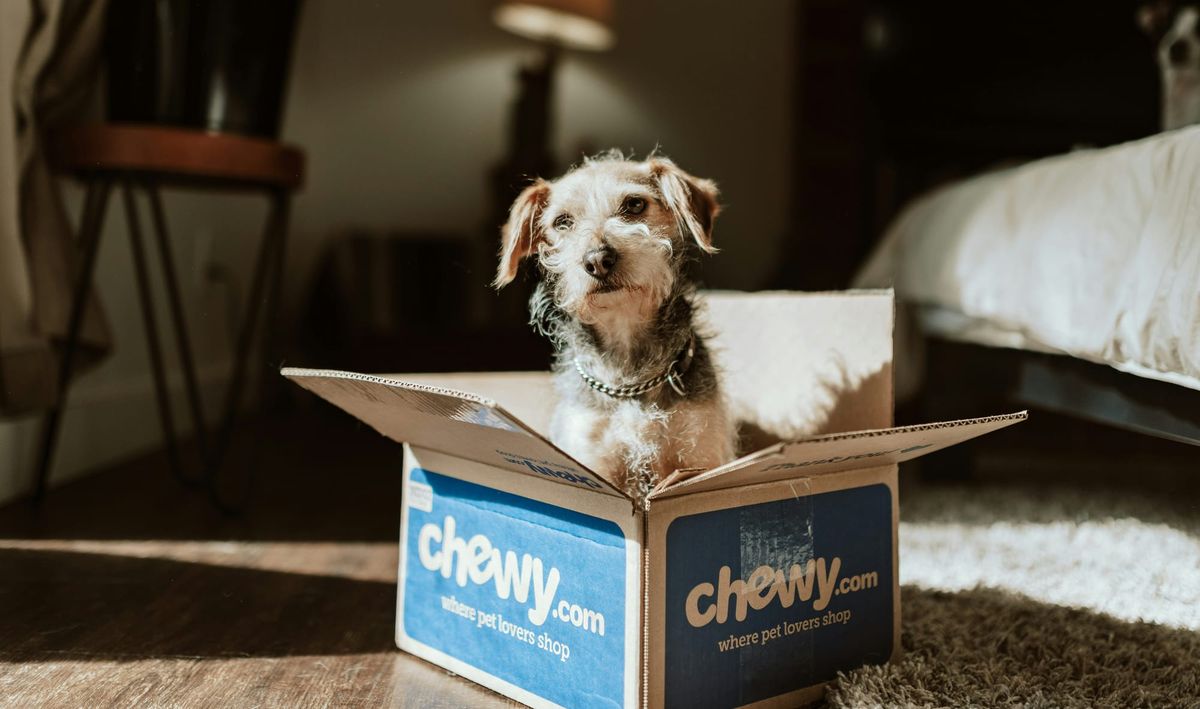
You type "best dog food" into Google. In 0.47 seconds, 47 million results materialize. The top spot is a Chewy buying guide. Below that, a Petco roundup. Then DogFoodAdvisor, a blog run by a golden retriever named Tucker, and some site called CanineJournal that looks like it was designed in 2006 and hasn't changed since. Every single one of them claims a different "Best Overall" winner. One swears by Orijen. Another says The Farmer's Dog. Chewy's pick is whatever has the highest margin that quarter.
You, a loving and slightly overwhelmed dog owner, scroll through these lists looking for the truth. You assume there's a team of veterinary nutritionists in lab coats somewhere, independently testing these foods for amino acid profiles, digestibility scores, and long-term health outcomes. You assume the rankings are based on science, not sales.
You assume wrong. The "best dog food" economy is a multi-billion-dollar affiliate marketing scheme dressed up in the language of objective review. And today, we're pulling back the curtain on the entire grift.
How Do "Best Dog Food" Lists Actually Work?
Most "best dog food" lists are affiliate marketing vehicles, not independent nutritional assessments. Review sites earn commissions when readers click through and purchase recommended products. The "best" food is typically the one with the highest conversion rate and largest affiliate payout — not the most nutritious option.
Here's how the machine operates. You read a glowing review of "Brand X Salmon & Ancient Grain Recipe" on a popular pet blog. The blog describes it as "life-changing" and "worth every penny." There's a conveniently placed "Buy on Chewy" button right beneath the glowing prose. You click. You buy. The blog owner earns a commission.
This isn't conspiracy theory. Chewy's Affiliate Program publicly advertises commission rates for anyone who signs up to promote their products. The same model powers Petco's affiliate network, Amazon Associates, and virtually every "best of" list on the internet. The people writing these lists are not nutritionists. They are search engine optimization specialists armed with affiliate links. Their incentive is not to find the healthiest food for your dog. Their incentive is to find the product with the highest conversion rate, the best payout structure, and the broadest search volume. The "best" food is the one most likely to make you click and buy before you think too hard.
Chewy and Petco dominate the "best dog food" search results because they host millions of product pages, each meticulously optimized for Google. They don't need to write a single honest review. They just need to rank first, show you a wall of five-star ratings, and wait for the cart to fill. The machine feeds itself, and your dog eats whatever the algorithm spat out.
Why Do Veterinarians Recommend Hill's, Royal Canin, and Purina?
These three brands collectively fund a significant portion of veterinary school nutrition curricula, sponsor continuing education, and supply free food to teaching hospitals. While their products meet AAFCO standards, the recommendation pipeline is financially influenced, not purely science-driven.
You trust your vet. So when they recommend Hill's Science Diet, Royal Canin, or Purina Pro Plan, you listen. And why wouldn't you? They wore a white coat through years of medical training. What you probably didn't see is the financial architecture behind that recommendation.
The three brands mentioned above — Hill's, Royal Canin, Purina — collectively fund a significant portion of the nutrition curriculum in veterinary schools across North America. They donate food to teaching hospitals. They sponsor the continuing education seminars your vet attends to maintain their license. They provide free product, free textbooks, and free lunches. The Tufts University Petfoodology team has openly discussed this dynamic, and the Veterinary Information Network (VIN) has run investigations into the depth of these financial entanglements. This isn't bribery in a legal sense; it's a deeply embedded, decades-old symbiotic relationship that blurs the line between education and marketing.
Your vet may genuinely believe they're recommending the best science-backed food. And to be fair, those brands employ real veterinary nutritionists and conduct feeding trials — something smaller, fresher-food companies often lack. But those trials are designed to prove nutritional adequacy, not superiority. Meeting AAFCO minimums is not the same as being the "best." And those prescription diets your vet sells at the clinic? Marked up significantly. The clinic earns revenue from every bag. This is a distribution model, not a purely medical one.
I'm not saying your vet is corrupt. I'm saying the system is built to funnel you toward three brands because those three brands built the funnel.
Are Dog Food Reviews Based on Lab Testing?
No. The vast majority of dog food review sites do not conduct independent laboratory analysis. Rankings are typically based on ingredient label reading, customer reviews scraped from retail sites, and guaranteed analysis numbers — none of which measure nutrient bioavailability, sourcing quality, or long-term health outcomes.
Let's dissect a typical "Best Dog Food of 2026" article. The methodology section, if it even exists, usually says something like: "We evaluated over 300 brands based on ingredient quality, guaranteed analysis, and customer reviews." Sounds rigorous. Let me translate that into what's actually happening.
"Ingredient quality" means the writer looked at the first five ingredients and checked if the first one was a meat. That's it. No laboratory analysis. No amino acid digestibility assays. No heavy metal screening. No assessment of ingredient sourcing, rendering temperatures, or fatty acid oxidation. Just a human with an English degree eyeballing a label and deciding it looks "premium."
"Customer reviews" means they scraped Chewy's star ratings, which are famously gamed by incentivized review programs, bots, and the simple fact that most dogs will eat anything and most owners can't assess long-term health outcomes from a bag of food.
"Guaranteed analysis" means they checked the protein and fat percentages on the label, which tell you almost nothing about the quality or bioavailability of those nutrients. You can hit 30% crude protein with chicken breast, or you can hit it with feather meal and corn gluten meal. The label number looks the same. The nutritional value is worlds apart.
A peer-reviewed study published in Frontiers in Veterinary Science compared fresh, gently-cooked dog food to extruded kibble and found significant differences in digestibility, gut microbiome composition, and inflammatory markers. The fresh food outperformed the kibble across multiple health metrics. This is the kind of research that should inform a "best" list. It almost never does, because fresh food companies don't dominate affiliate programs and don't stock Chewy fulfillment centers.
The "winner" is often the brand that combines a decent-looking label with broad availability and a high affiliate commission rate. The brand that puts a stock photo of a wolf on the bag and charges $90 wins the "premium" category. The brand with the biggest advertising budget wins "best overall." It's marketing theater reviewed by marketing affiliates.
What Is the Healthiest Dog Food That Isn't on Chewy?
The healthiest dog foods are often fresh, frozen, or freeze-dried formulas sold direct-to-consumer, not through Chewy or Petco. These foods prioritize named meats, organs, and whole ingredients without the synthetic preservatives and fillers required for long shelf-life kibble. They rarely dominate affiliate "best" lists because they lack affiliate budgets.
Here's the uncomfortable conclusion that no sponsored list will ever tell you: The best food for your dog probably doesn't come in a bag with a two-year shelf life. It's not extruded, it's not sprayed with synthetic vitamin mist, and it's not warehoused in a Chewy fulfillment center in Kentucky.
The best food is fresh, frozen, or gently freeze-dried. It's made from named muscle meats and organs, sourced from farms with verifiable welfare standards, and formulated by people who publish their certificates of analysis publicly. It doesn't need a $10 million Super Bowl commercial because that money went into the ingredients, not the ad buy. It's sold direct to you, cutting out the retail middleman who would demand a 40% margin. It might be raw. It might be lightly cooked. It might be a balanced homemade recipe designed by a board-certified nutritionist. What it almost never is, is a brown pellet in a shiny bag at the top of an affiliate roundup.
Does this mean all kibble is evil? No. There are some genuinely well-made, meat-forward, minimally processed dry foods out there. But they are the exception, not the rule. And they rarely dominate the "best" lists because they lack the affiliate budget to incentivize coverage. The system rewards marketing spend, not ingredient density.
We've already shown you how to read a dog food label so you don't need a list. And we've exposed exactly what fillers like powdered cellulose look like on those labels. You already have better tools than any affiliate blogger.
How Do I Choose the Best Dog Food Without Relying on Lists?
To choose a dog food without relying on affiliate lists:
- Learn to read and interpret ingredient labels. Our full guide is here.
- Prioritize named meats and organs in the first five ingredients.
- Avoid foods with multiple forms of the same cheap filler (ingredient splitting).
- Look for brands that publish full certificates of analysis (COA) on their website.
- Consider fresh, frozen, or freeze-dried options over extruded kibble when possible.
- Consult a board-certified veterinary nutritionist, not a sponsored blog, for medical dietary questions.
The person who should be deciding what's best for your dog is you — armed with a working knowledge of ingredient labels, species-appropriate nutrition, and a healthy skepticism of any ranking system that has a "Buy Now" button embedded in it.
So the next time you Google "best dog food," pause. Recognize that you're not stepping into a library; you're walking onto a used car lot where every salesman earns a commission on whatever clunker you drive off in. The best salesman isn't the one with the best car. He's the one with the best commission structure.
H2: Frequently Asked Questions About Dog Food Rankings
Q: Is DogFoodAdvisor a reliable source?
DogFoodAdvisor is not run by a veterinarian or animal nutritionist. The site earns affiliate commissions on recommended products and evaluates foods based on ingredient label analysis, not independent testing. Use it as a starting point for ingredient lists, not a final authority.
Q: Do pet food companies pay to be on "best" lists?
Not directly in most cases, but they fund the affiliate ecosystem that powers those lists. Brands with larger marketing budgets and broader retail distribution naturally appear on more lists because they are easier to link to and generate higher commissions.
Q: Are prescription dog foods worth the money?
Prescription diets serve a clinical purpose for specific medical conditions and are formulated under veterinary oversight. However, many contain the same fillers (cellulose, corn gluten meal, by-products) found in lower-cost foods. Ask your vet why a specific prescription food is necessary and whether a whole-food alternative exists.
Q: What is the difference between AAFCO feeding trials and independent research?
AAFCO feeding trials establish minimum nutritional adequacy over 26 weeks using a small number of dogs. They are a pass/fail test for basic health maintenance, not a measure of optimal nutrition. Independent peer-reviewed research often finds significant differences between foods that all pass AAFCO trials.
Q: Should I trust Amazon or Chewy reviews for dog food?
Exercise caution. Both platforms are susceptible to incentivized reviews (free product in exchange for positive ratings), review aggregation across product variants, and bot activity. Cross-reference reviews with independent research and ingredient analysis.
Stop searching "best dog food." Start searching "how to read a dog food label." You just became the expert your dog needs. Share this with someone who's still trusting the Chewy algorithm — they'll thank you, and their dog will thank you louder.